
LLC Tax DeadlineThe date follows the election
Your LLC has a tax deadline, and which one depends on the election already on file: March 15 if you elected S corporation or have partners, April 15 if you are the only owner and never elected. Tell us which election is on file and we match the date, close the month under the return, and prepare it. Steven Palmieri takes the election you name and writes March or April on the work papers, as Tax CFO, the Entrepreneur's CFO.
Name the election on file
You will be talking to the Steven Palmieri practice.
Before the paperwork, a Tax CFO asks whether this date belongs to the company at all.
A preparer meets the deadline. The Tax CFO asks whether the deadline is even the right one: an election made in October can change which date is yours next year and what you pay. One counts what happened. The other decides what happens next.

Two owners, mid March
March 15. That is the day for a partnership and for an S corporation, and it comes first.
Tap to open March ›Click to open March ›
One owner, mid April
April 15. One owner, no election, and your return is your own return.
Tap to open April ›Click to open April ›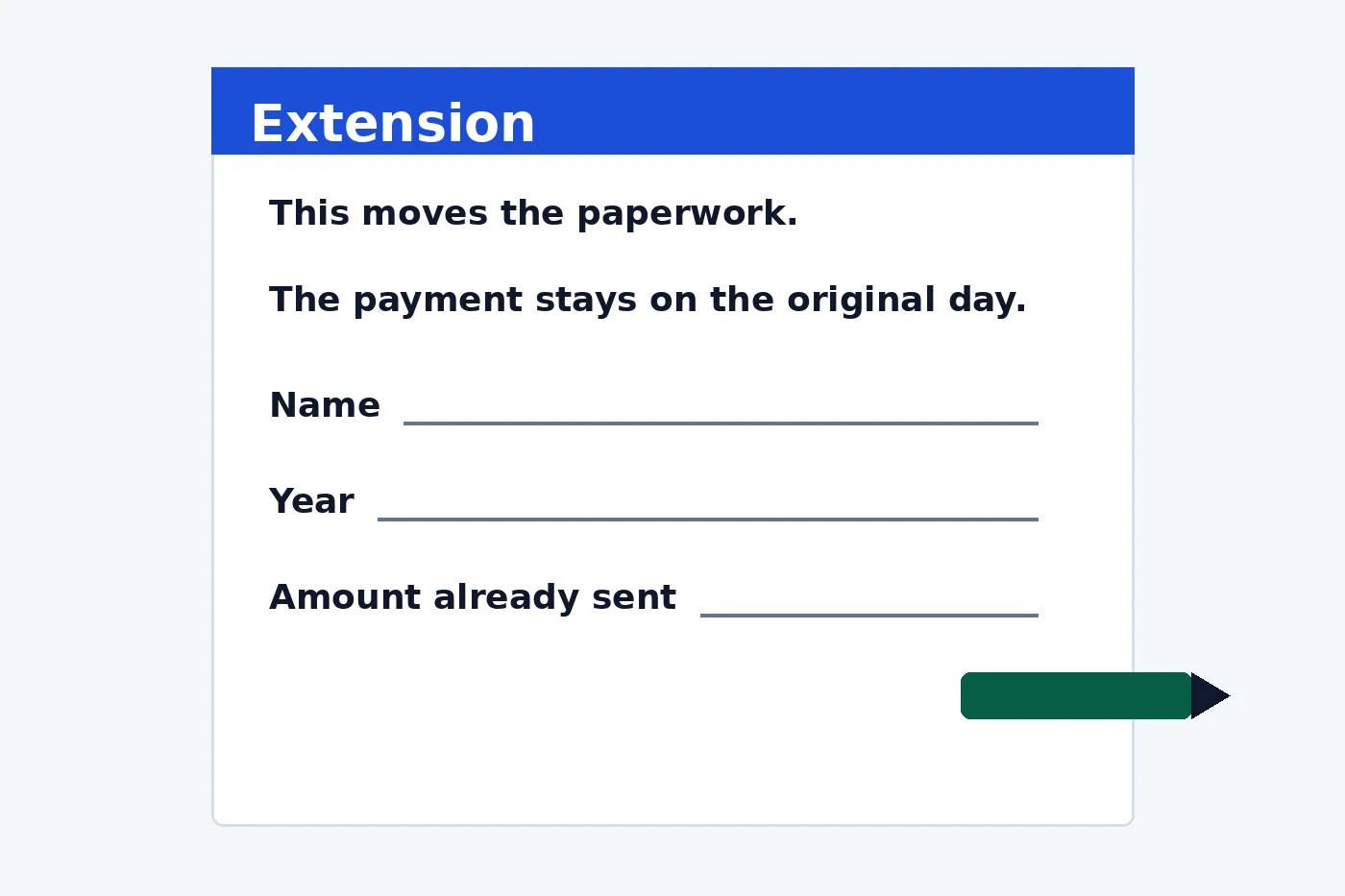
The filing moves
An extension moves the paperwork, not the payment. The money is still due on the original day.
Tap to open the split ›Click to open the split ›A Friday in May
That Friday is Form 990 for many exempt organizations, not the income-tax day for the four business elections.
Tap to open the May note ›Click to open the May note ›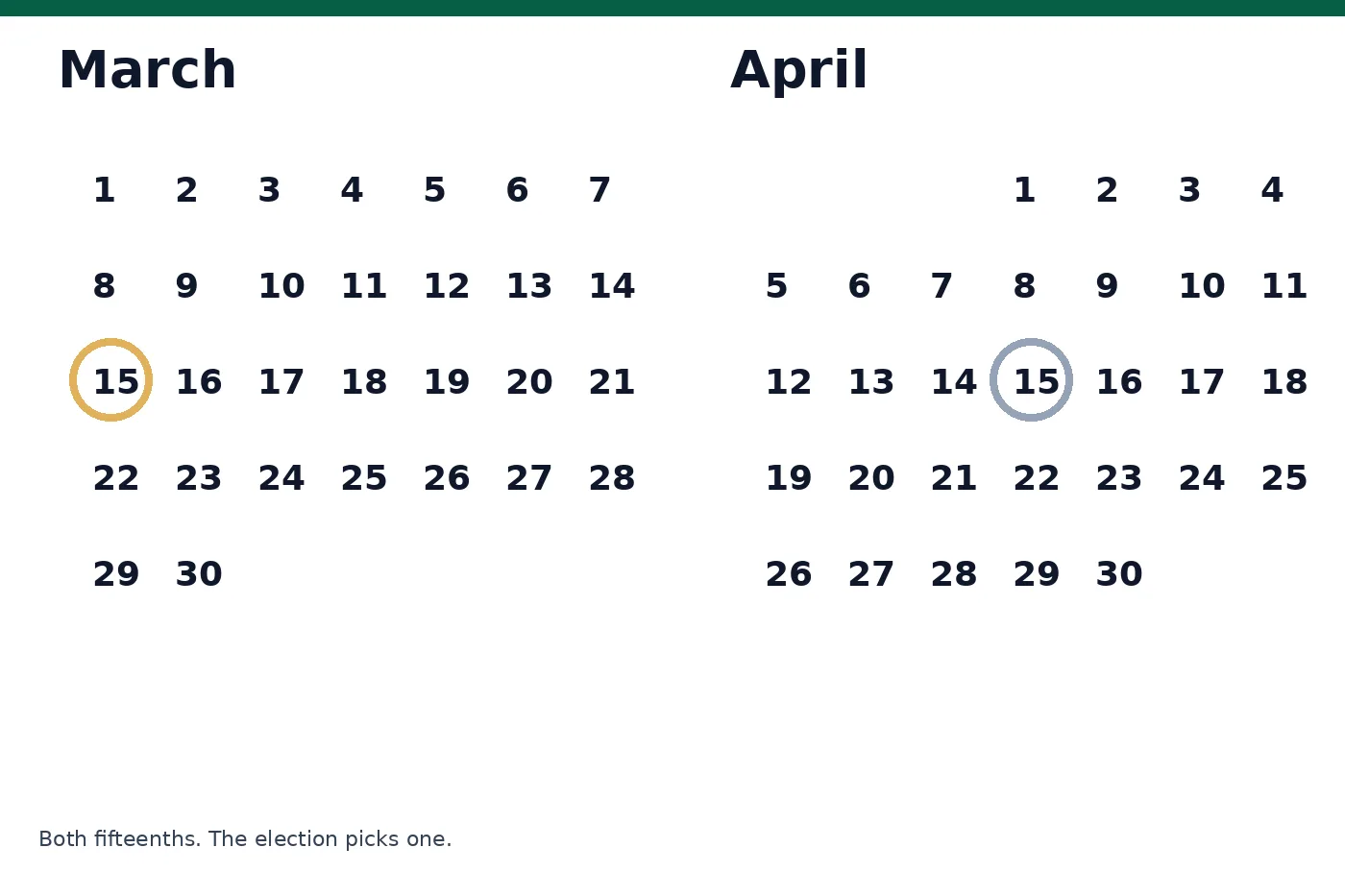
Why the name sounds singular
The domain is named for a date, and the date that matters depends on the election already accepted.
Tap to open the name ›Click to open the name ›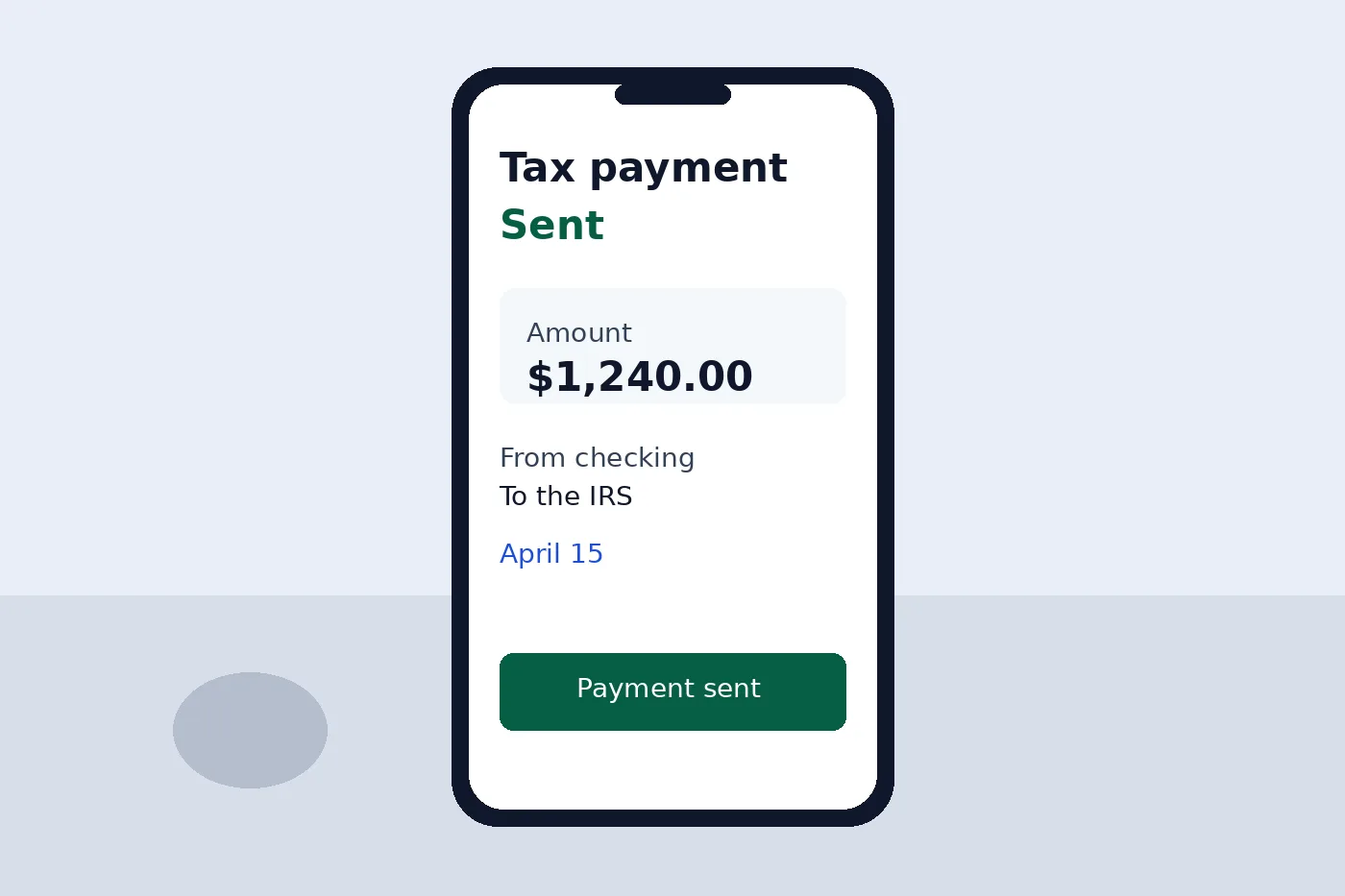
Bring the paper you have
A notice, a payroll setup, a receipt, or a date copied from someone else is enough to start.
Tap to open the questions ›Click to open the questions ›Six dates, one company
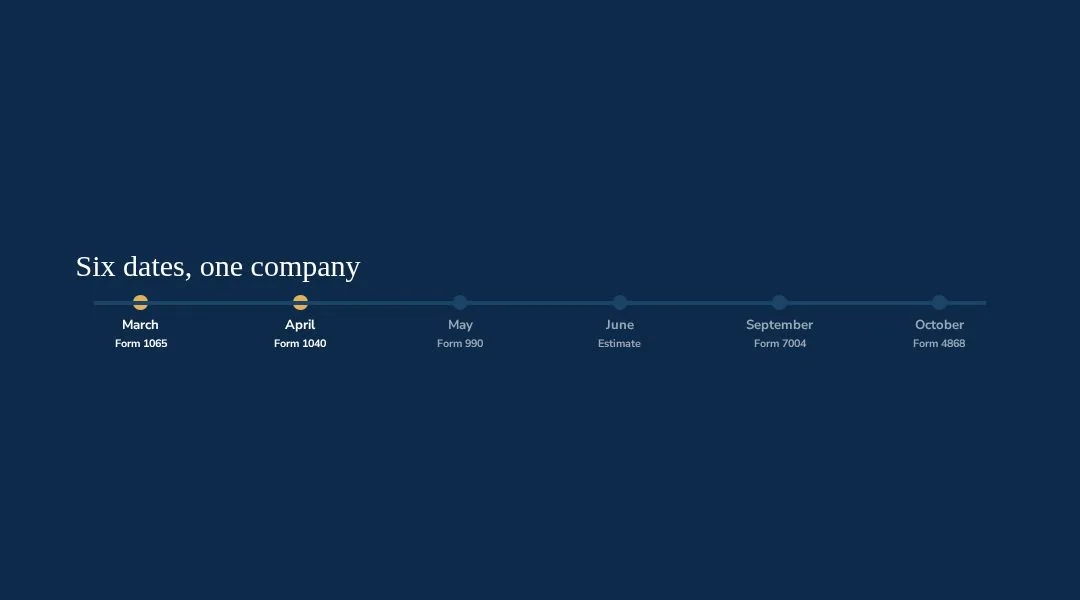
Open a month. Each line is a federal day that follows from the election already on file.
1March
Calendar-year partnership returns and calendar-year S corporation returns share the fifteenth day of the third month. In 2026 that printed day was a Sunday, so the filing day became Monday, March 16.
We look up the election already accepted before we treat Monday as your filing day. A payment that was due on the earlier day does not inherit the extra day.
2April
April 15, 2026 was a Wednesday. A disregarded owner meets that week on the individual return. A calendar-year C corporation meets it on Form 1120.
We ask which of those two treatments is actually on file before anyone borrows a friend's April sticky note.
3May
May 15, 2026 is a Friday. Many calendar-year exempt organizations file Form 990 that Friday.
We keep that Friday off the income-tax calendar of a business company taxed as a partnership, an S corporation, a disregarded owner, or a C corporation.
4June
June 15, 2026 is a Monday, and it is one of the estimate days many owners already have on a personal or corporate estimate calendar.
We do not let an extension of the return shove this Monday later. The estimate stays on its own date.
5September
September 15, 2026 is a Tuesday. A Form 7004 extension for a calendar-year partnership or S corporation commonly runs the filing to that Tuesday.
We still reconcile the payment back to March. The Tuesday is a filing day, not a new payment day.
6October
October 15, 2026 is a Thursday. A Form 4868 extension for a disregarded owner, and a Form 7004 extension for a calendar-year C corporation, commonly run the filing to that Thursday.
We keep the April payment where it was. October is the paperwork, not a second chance to fund the year.
Who keeps the date honest
Steven Palmieri is the Tax CFO. Entrepreneur's CFO is the name on the work itself, beside Tax CFO. The month has to close before a March or April return is honest, and payday stays on a provider account the owners run themselves.
Four treatments, four places on the year
There is no single federal day that every limited liability company shares. The company is a legal shell. The tax treatment is a separate fact, and the fact is whatever the agency has already accepted, not whatever a friend remembers from last spring.
Two owners who have never elected anything else are usually a partnership. Their calendar-year Form 1065 wants the fifteenth day of the third month. An S corporation that has a live acceptance letter wants the same month, on Form 1120-S. In 2026 that printed fifteenth was a Sunday, so the act of filing moved to Monday, March 16. We say the Monday out loud so nobody sits on the Sunday and calls the return late when the weekend rule already moved it.
One owner whose company is disregarded rides the individual Form 1040. That return met April 15, and in 2026 April 15 was a Wednesday. A calendar-year C corporation met the same Wednesday on Form 1120. Same week, different forms, and neither of them is the March filing.
An S election that was signed and never accepted does not move the company by hope. We ask for the acceptance, or we ask you to say you cannot find one. The books can be beautiful and the date can still be the old one until that letter exists.
The owner's own return often waits on a K-1 that is born on the company return. Missing that schedule is not a mystery of the software. It means the company return has not been finished, so the number the owner needs has not been born yet. We finish the company first.
What an extension actually moves
Form 7004 is the extension most partnerships, S corporations, and C corporations use. Form 4868 is the one a disregarded owner uses, because that owner is on the individual return. Both forms move a filing day. Neither form was written to move the day the tax itself is due.
For a calendar-year partnership or S corporation, a timely 7004 commonly runs the filing out to September 15. In 2026 that day is a Tuesday. For a disregarded owner, a timely 4868 commonly runs the filing out to October 15, a Thursday in 2026. A calendar-year C corporation on 7004 commonly lands on that same Thursday. The Tuesday and the Thursday are filing days. The money that was due in March or April was due then.
A notice that shows up in the summer is often about the payment that stayed behind, not about a return that was still inside its extension. We read the notice for the form number and the period before we tell you which calendar it belongs to. The relief conversation, when there is one, is about the records and the reason the payment and the filing came apart. The charge named in that notice stays in the notice. This page does not turn that charge into a rate of its own.
The other calendars sharing the year
Estimates for many owners fall in April, June, September, and the January that follows the year. June 15, 2026 is a Monday. September 15 is also an estimate day for many of those same owners, even while it is an extended filing day for a partnership. January 15, 2027 is a Friday. An extension of the income-tax return does not slide those estimate days. We keep them on a separate line so a Tuesday in September is not asked to do two jobs without anyone noticing.
Payday is a third calendar. We help a provider account exist, including the registrations and the deposit rhythm that provider will follow. The runs, the deposits, and the payroll filings stay with the provider you control. Those deposit days are not the company return, and they do not move when Form 7004 moves the return.
A monthly close sits under all of this. We will not take the new month while the prior month is still open. The return is a stack of closed months plus the election. A draw on an S corporation gets recorded against stock, the accumulated adjustments account, and the distributions already taken, so the equity picture is a ledger and not a guess made in March.
A date copied from someone else
The most common wrong day we see is a day that was right for a different election. A friend who is disregarded writes April on a blank note and sticks it where you will see it. Your company has two owners and no S acceptance, so your federal entity day is the March one. The friend was not wrong about the friend's own return. The note was never about yours.
The other shape is inside the company. One partner was sure the other partner had already filed. The return was still in the drawer, and the sticky note on the fridge still said April. The note belonged to a different election. The filing nobody had sent was the partnership's March filing.
We wrote that shop out in full on its own page, and we labeled it as made up. No client figures live there. The point is the shape. A receipt in a drawer tells you what the shop sold. It does not tell you which federal form the company files, and it does not tell you whether an extension moved only the filing.
A notice you already hold can ride along as the first piece of paper. If payday deposits and the return have been landing in the same week, say that too. A date you only heard from someone else is still a place to begin. We will name the election we need to see, and the federal day that follows from it.
Tell us the date you heard
You will be talking to the Steven Palmieri practice.